

Every growing team reaches this point.
Work is increasing. Targets are getting higher. Pressure is building.
And the most common response? “We need to hire.”
It sounds reasonable. More work should mean more people.
But here’s the uncomfortable truth:
Most teams don’t struggle because they lack talent.
They struggle because their talent isn’t working together in the right way.
The Real Problem Isn’t Hiring, It’s How Work Gets Done
Take a step back and look at how work actually flows inside most teams.
- Marketing creates campaigns
- Sales follows up on leads
- Operations manages systems
- Data sits in dashboards
On paper, everything looks covered.
But in reality?
- Campaigns take too long to launch
- Messaging keeps changing
- Insights don’t turn into action
- Results feel inconsistent
The issue isn’t effort. And it’s not capability either.
It’s how disconnected everything feels during execution.
Why Hiring More People Doesn’t Solve This
When results don’t match expectations, the natural instinct is to fill gaps.
“Let’s hire someone for this.”
“Maybe we need another specialist.”
But here’s what usually happens next:
- More people mean more coordination
- More coordination means more delays
- More delays mean slower execution
Instead of fixing the problem, the system becomes heavier.
Because adding people doesn’t automatically improve how work connects.
What Teams Actually Need (But Often Miss)
Growth today depends on a few simple things:
- Moving quickly from idea to execution
- Acting on insights without delay
- Keeping messaging, campaigns, and data aligned
None of this depends on having more people.
It depends on having the right expertise working together simultaneously.
And this is where most teams fall short.
The Shift: From Hiring Roles to Solving for Outcomes
Instead of thinking in terms of roles, start thinking in terms of outcomes.
Don’t ask:
“Who should we hire next?”
Ask:
“What needs to happen for us to grow?”
That shift changes everything.
Because now, you’re not trying to fill positions.
You’re trying to solve a problem with the right mix of expertise.
What Assembling Expertise Actually Means
Imagine you want to improve the pipeline from a specific segment.
Instead of hiring one person at a time, you bring together:
- Someone who understands messaging
- Someone who can execute campaigns
- Someone who can track and improve performance
They work together on one goal.
Not in sequence. Not across different teams.
But side by side, from the start.
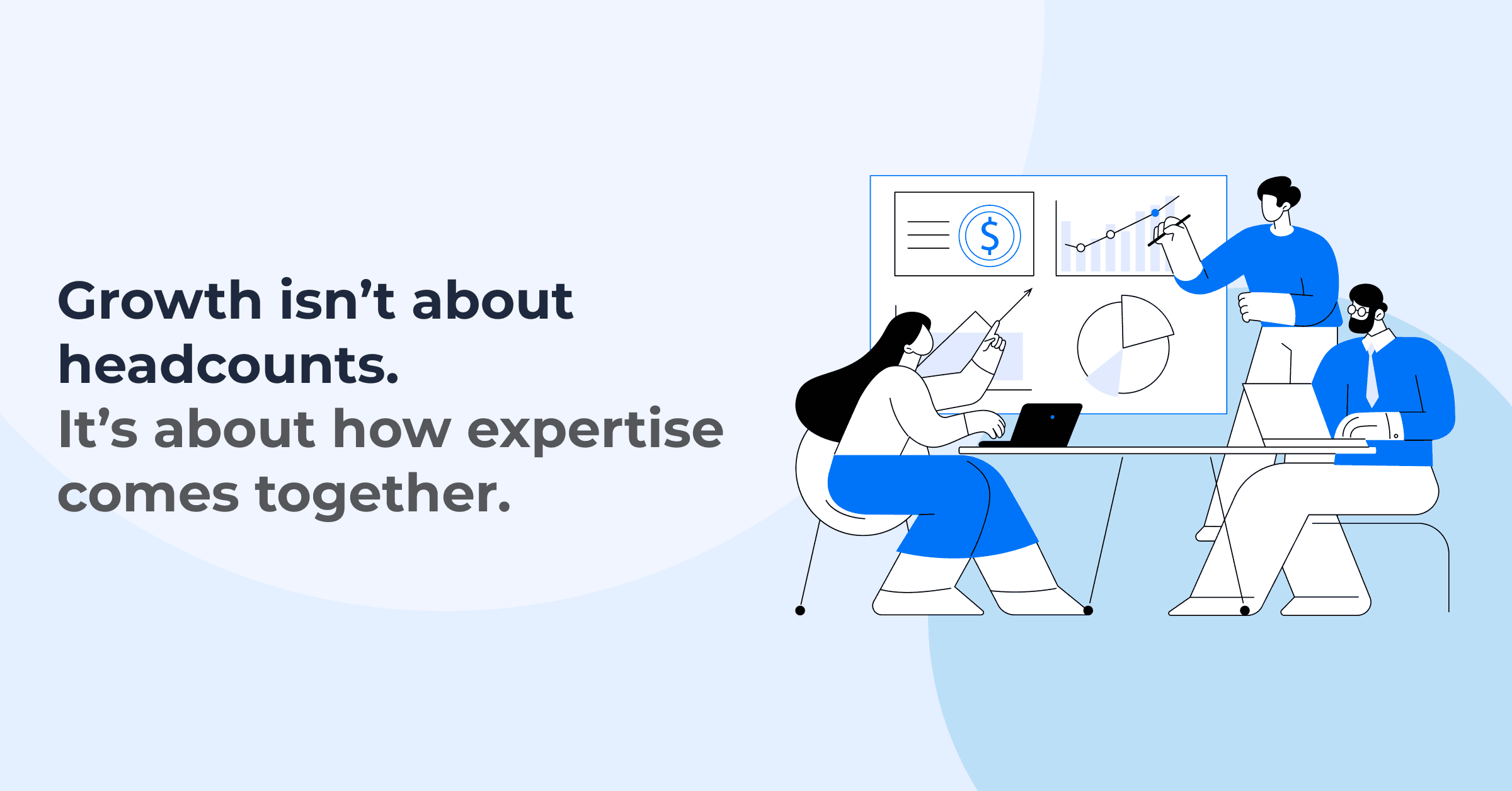
This is what assembling expertise looks like.
How This Approach Changes Execution
When the right expertise is brought together early, things start to feel different:
- Work moves faster because there are fewer handoffs.
- Decisions happen more quickly because context is shared.
- Results improve because everything is aligned with one outcome.
You’re no longer managing tasks across teams.
You’re driving progress as a unit.
A Simple Way to Start Thinking Differently
You don’t need a complete overhaul to begin.
Start with one question:
“Where are we slowing down the most?”
Is it:
- Campaign execution?
- Messaging alignment?
- Converting leads into pipeline?
Once you identify that, map the expertise needed to fix it.
Then bring that expertise together—clearly focused on that one outcome.
Not spread across different priorities.
Not waiting on each other.
Just aligned and moving.
Why This Matters More Than Ever
Today, almost every team has access to:
- Good tools
- Smart people
- Proven playbooks
So, what actually makes the difference?
How quickly and effectively you execute
Execution depends less on the number of people you have and more on how well they work together.
The Value of Getting This Right
When you move from hiring talent to assembling expertise, you start to see:
- Faster turnaround on campaigns
- Better use of insights
- More consistent pipeline growth
But more importantly, you reduce friction.
And that’s where most growth gets lost.
Final Thought
Hiring will always be part of building a team.
But it shouldn’t be the first answer to every growth challenge.
Because growth doesn’t come from adding more people into the system.
It comes from bringing the right expertise together—and putting it to work quickly.
So before you open your next role, pause and ask:
“Do we really need more people?
Or do we need to bring the right expertise together?”
That one question can change how your entire growth system works.
Ready to rethink how you build for growth? Let’s talk!
If your growth plan still starts with hiring, it might be time to rethink the approach.
At Growth Natives, we help teams do exactly that—so they can move faster, execute better, and drive real outcomes.
Reach out to us at info@growthnatives.com to explore what that could look like for you.